PICALLW · TECHNOLOGY & RESEARCH

We build technology.
We test hypotheses.

PICALLW connects software engineering with research into data, complex systems, measurement and automation. The goal is not to manufacture spectacular conclusions, but to build tools that allow ideas to be tested against data.

Time seriesComplex systemsGDV / HRV / ECGAutomation R&DValidation
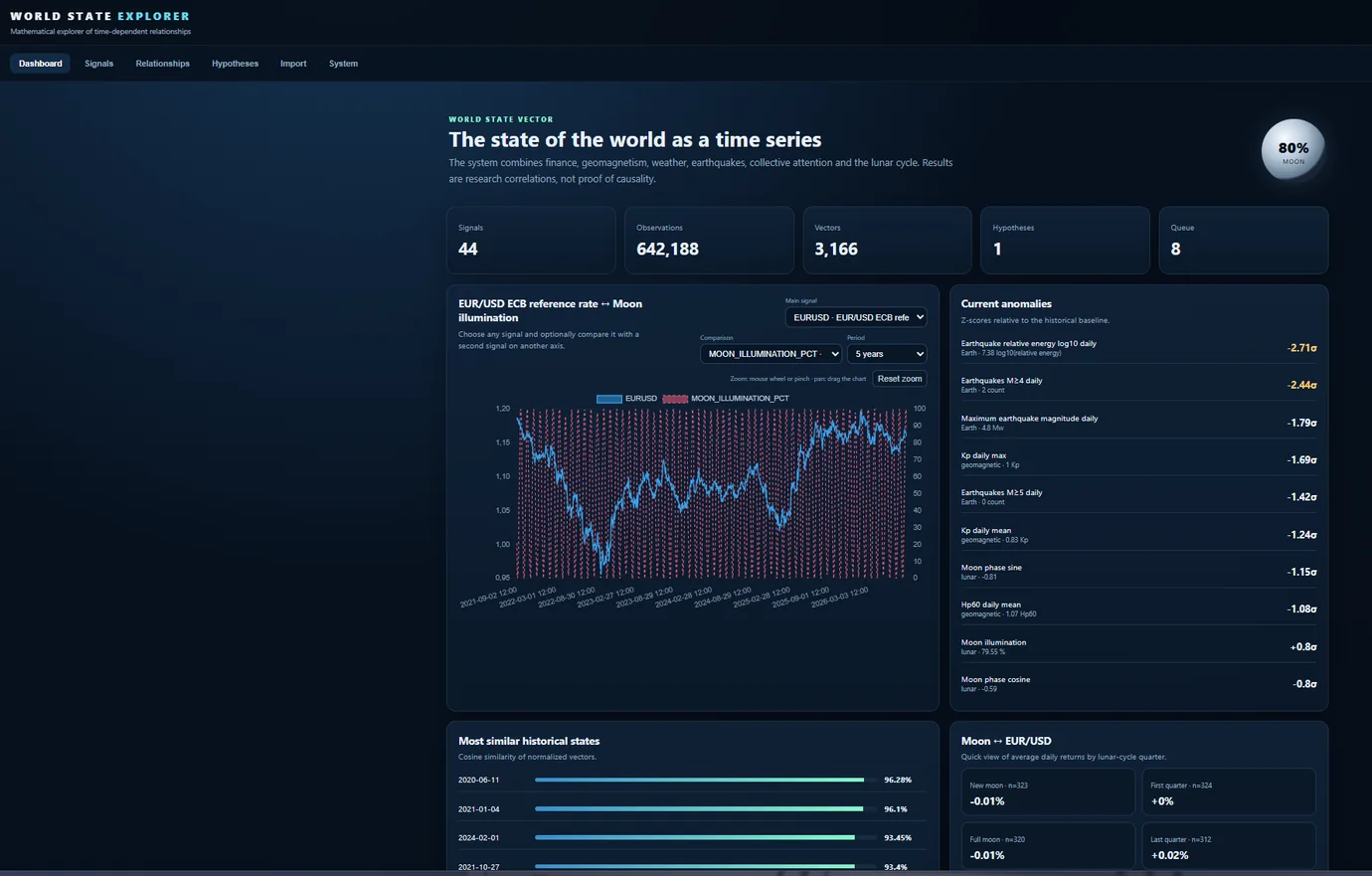
World State Explorer dashboard with World State Vector, time series and anomalies
TECHNOLOGY & RESEARCH AREAS

Three areas, one common approach.

Different PICALLW projects share the same foundation: measurable data, transparent algorithms, practical software implementation and clearly stated limits of interpretation.

01 · COMPLEX SYSTEMS

World State Explorer

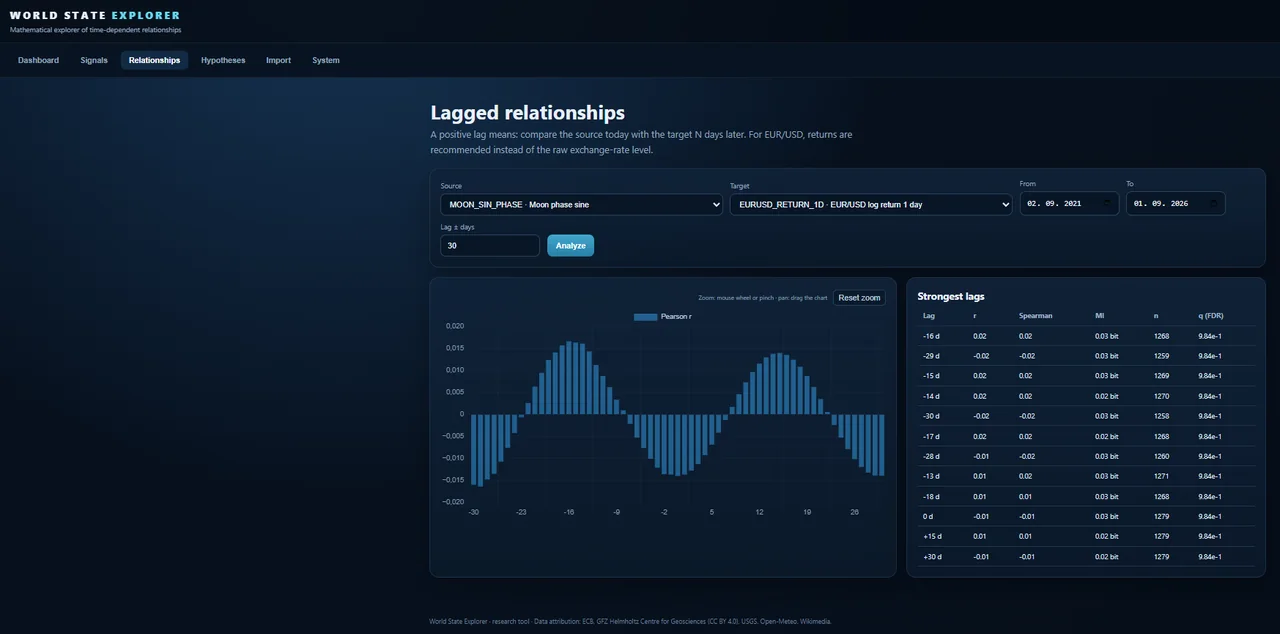
Multidimensional time series, time lags, similar historical states, anomalies and hypothesis validation.

  • ECB, geomagnetism, weather and public time series
  • correlation, Mutual Information and FDR
  • Discovery → Validation → Replication
Open Explorer →
02 · MEASUREMENT & ANALYSIS

GDV Studio Research

Research into GDV/EPI imagery together with HRV and ECG, including more transparent image analysis and longitudinal trends.

  • GDV/EPI morphology and acquisition quality
  • HRV + Polar H10 + ECG
  • personal baseline and longitudinal comparison
GDV/EPI technical article →
03 · AUTOMATION ENGINEERING

NODVIA R&D

Field diagnostics, project data, HMI design and Android visualization as one engineering workflow.

  • NODVIA Field for discovery and commissioning
  • NODVIA Studio for HMI design
  • Project Visualization as the Android runtime
Explore NODVIA →
RESEARCH PRINCIPLES

From an interesting idea to a testable result.

1MeasureCollect sufficiently reliable and correctly time-aligned data.
2DiscoverSearch for structure without forcing a predetermined conclusion.
3ValidateTest the finding on data that were not used to discover it.
4ExplainShow the method, uncertainty and plausible alternative explanations.
WORLD STATE EXPLORER

Explore the data directly.

The interactive research tool is publicly accessible. Results are exploratory statistical relationships and do not establish causation or guarantee future events.