Ideas made clearer through technology, research and critical reflection.
The Knowledge Base is organised into seven thematic categories: NODVIA & Automation, Digital Radionics, Custom Software, AI & Technology, Spirituality & Science, GDV & Research and Human Potential. It currently contains sixty-four in-depth articles, organised so visitors can quickly find the area that matters to them.
Choose a category or show all articles. The content below is grouped by topic.
Latest 10 articles
The newest Knowledge Base content with direct links and the publication or latest major-content update date.
Digital Radionics
9
Sigils in the Digital Age: From Intention to Digital Symbol
History, modern sigilisation and the new DigitalRadionic3 sigil generator.
Read article →
Can Technology Help With Manifestation?
What goals, attention and action can explain, and where spiritual interpretation begins.
Read article →Digitally Assisted Manifestation: From Intention to Action
Connecting a clear intention, a digital session, reflection and a concrete real-world step.
Read article →Subliminal Intention in Digital Radionics
What brief intention flashes mean, why full text is the default and why vowel-free encoding remains experimental.
Read article →Digital Radionics Software in the 21st Century
What radionics software does, app vs. machine, free vs. complete tools, comparison criteria and scientific limits.
Read article →The Symbolic Matrix as a Tool for Focused Intention
How structured symbols, colour, geometry and written intention can support reflection, visualisation and more consistent work with personal goals.
Read article →
Biofeedback and Subjective Reflection: What Can We Actually Measure?
A measurement can reveal a physiological signal, but not automatically its meaning. A good system separates data, interpretation and personal experience.
Read article →
Ethics and Safety in Digital Radionics
How to design digital radionics as a safe tool for focus, reflection and personal practice without unsupported health claims.
Read article →
From Intention to a Repeatable Digital Protocol
A good intention is clear, ethical, measurable and documented. A repeatable protocol supports better reflection and fewer arbitrary interpretations.
Read article →Custom Software
5
Why Custom Software Can Be a Better Investment
When an off-the-shelf product is enough and when a tailored solution becomes a business advantage.
Read article →
Business Process Automation Without Digital Chaos
Good automation does not simply mean more software. It means less manual work, less duplicated data and clearer responsibility.
Read article →
How to Modernise Legacy Business Software Safely
Legacy software is not necessarily bad software. It often contains decades of business knowledge and should be modernised with care.
Read article →
Architecture Before Code: Why Good Projects Start with Decisions
The most expensive mistakes happen when development starts before data, responsibilities, system boundaries and maintenance are clear.
Read article →
Offline-First Business Applications: Reliability Without a Connection
Local operation, synchronisation and explicit conflict rules can greatly improve the resilience of specialised software.
Read article →AI & Technology
8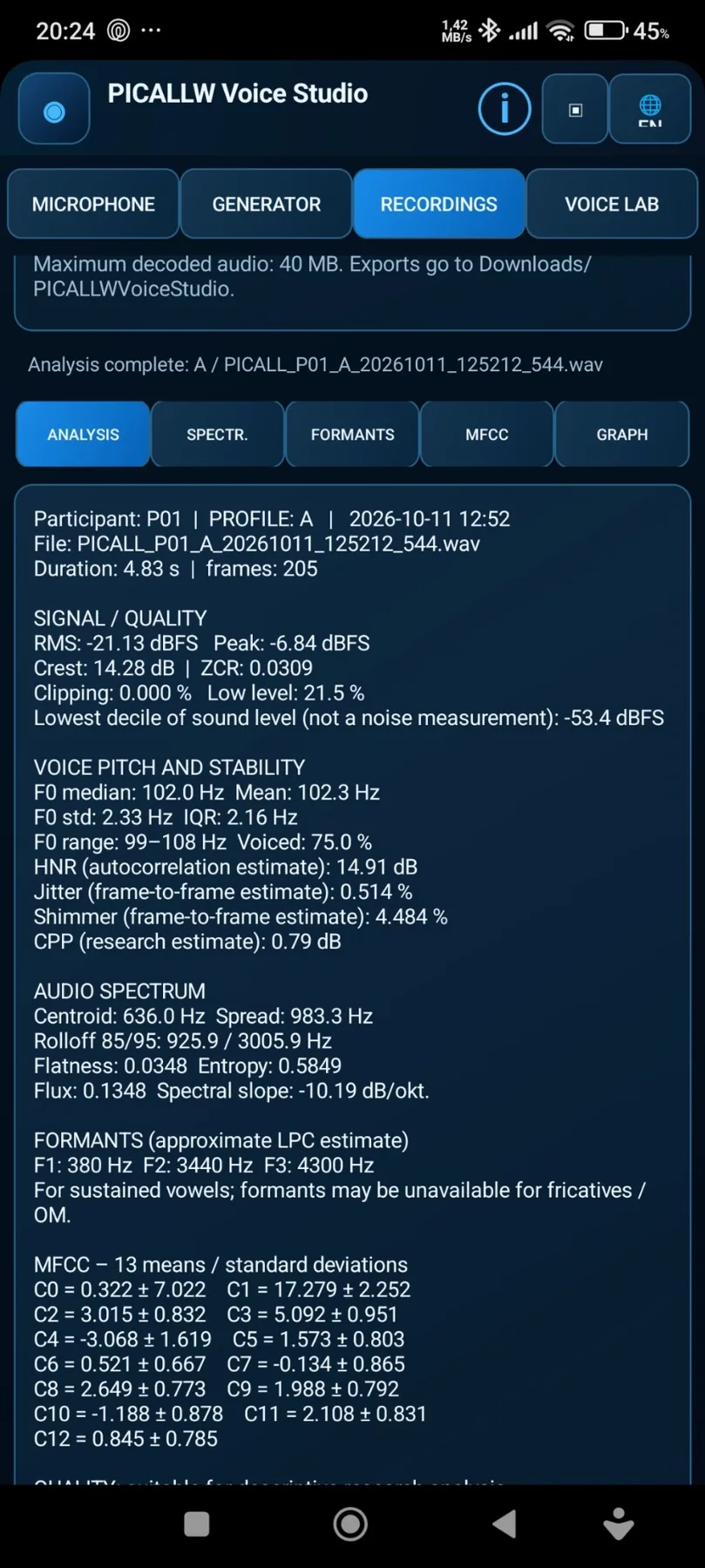
From voice to cymatics: what can we actually measure?
What is measured, calculated and modelled when we analyse voice and visualise resonance.
Read article →
What makes technical software trustworthy?
Explainability, reproducibility, uncertainty and an evidence trail that survives AI.
Read article →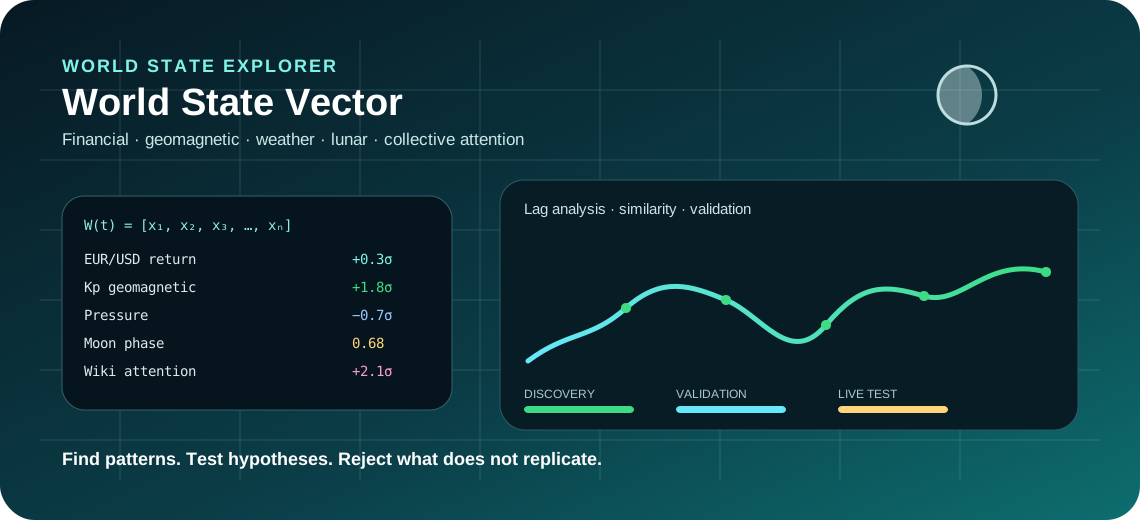
World State Explorer: mathematical exploration of hidden relationships in the world of data
World State Vectors, time lags, historical similarity, FDR, validation and repeatable patterns in complex time series.
Read article →
How AI Is Transforming Specialized Software Development
AI is becoming part of the workflow rather than merely a standalone chatbot.
Read article →
Local Artificial Intelligence in Business: Privacy, Control and Real Constraints
Local models can reduce data exposure and increase control, but they require sound architecture, hardware and governance.
Read article →Explainable AI and Human-in-the-Loop Decision Making
For important decisions, an answer alone is not enough. The system should expose sources, uncertainty and a clear route to human approval.
Read article →
RAG: When AI Answers from Your Documents
Connecting a language model to a controlled document collection reduces guessing and enables sources, versions and context to be shown.
Read article →
AI Agents in Business Workflows: From Demo to Controlled Work
An agent becomes useful only with limited permissions, traceable actions, approvals and a clear way to stop it.
Read article →Spirituality & Science
9
Pineal gland decalcification: myth or reality?
What is real about pineal calcification, what humming and nasal NO actually do, and where the popular “decalcification” story outruns the evidence.
Read the evidence review →Spirituality and Science: Can They Have a Productive Dialogue?
Openness without gullibility and scepticism without automatic dismissal.
Read article →
Meditation, the Brain and Measurement: What Research Can and Cannot Tell Us
Measurements can track attention, stress and physiology. They cannot determine the personal or spiritual meaning of an experience.
Read article →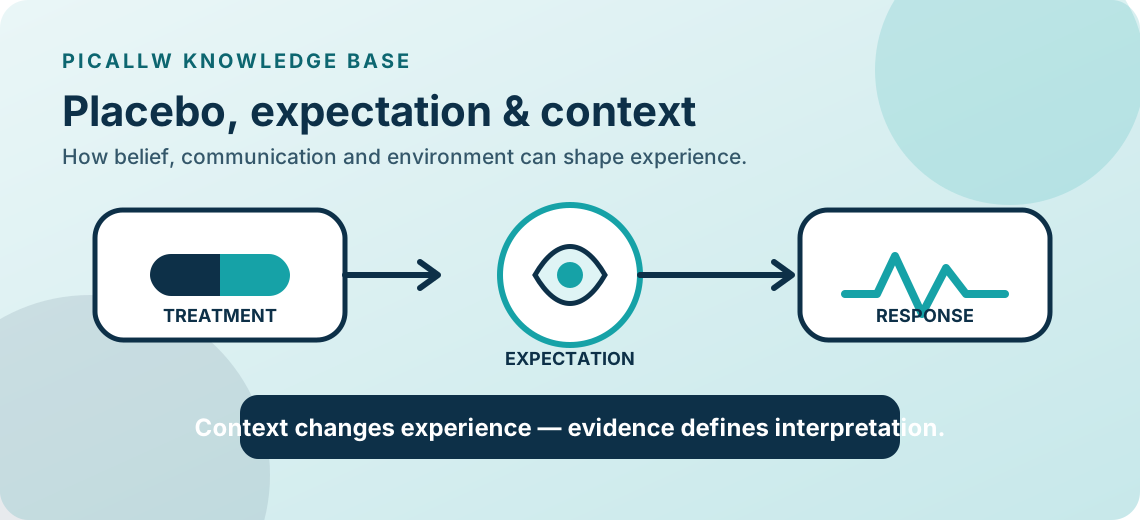
Placebo, Expectation and the Power of Context
Expectations can influence experience and some measurable responses. This does not validate every explanation, but it is an important part of human biology and care.
Read article →
Transhumanism – the Next Stage of Evolution or the Loss of Our Humanity?
Transhumanism promises longer lives, enhanced abilities and a closer integration of people and technology. The essential question is not only what we will be able to do, but what kind of human beings we want to become.
Read article →
Can Artificial Intelligence Develop Consciousness?
Artificial intelligence can speak about itself, explain emotions and imitate introspection. Convincing language, however, is not evidence of subjective experience.
Read article →
Biofeedback as a Bridge Between Technology and Inner Development
Biofeedback can show how the body responds to breathing, attention, stress and practice. It is most valuable when measurement becomes a mirror rather than a judge of human experience.
Read article →
Digital Immortality: Memory, Identity or a Convincing Copy?
A digital avatar may preserve stories and a style of expression, but it does not resolve continuity of consciousness or personal identity.
Read article →
Intuition and the Predictive Brain: Fast Knowledge or Something More?
Intuition often combines unconscious pattern recognition, bodily signals and experience. Its value grows when it is tested without blind trust.
Read article →GDV & Research
12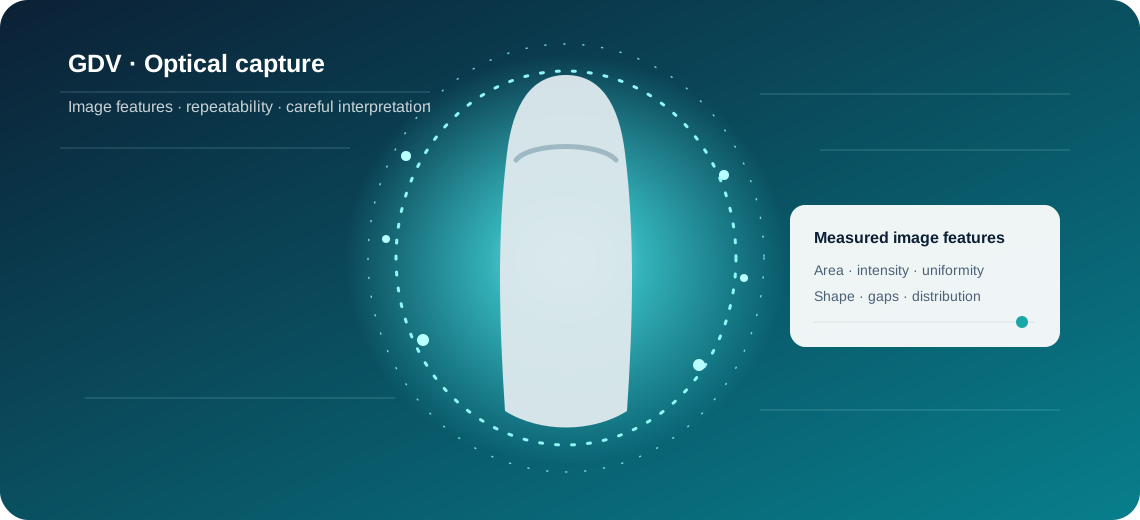
How to analyze Bio-Well BDF files locally with GDV Studio
From original measurement to quality, morphology, repeatability and longitudinal comparison.
Read article →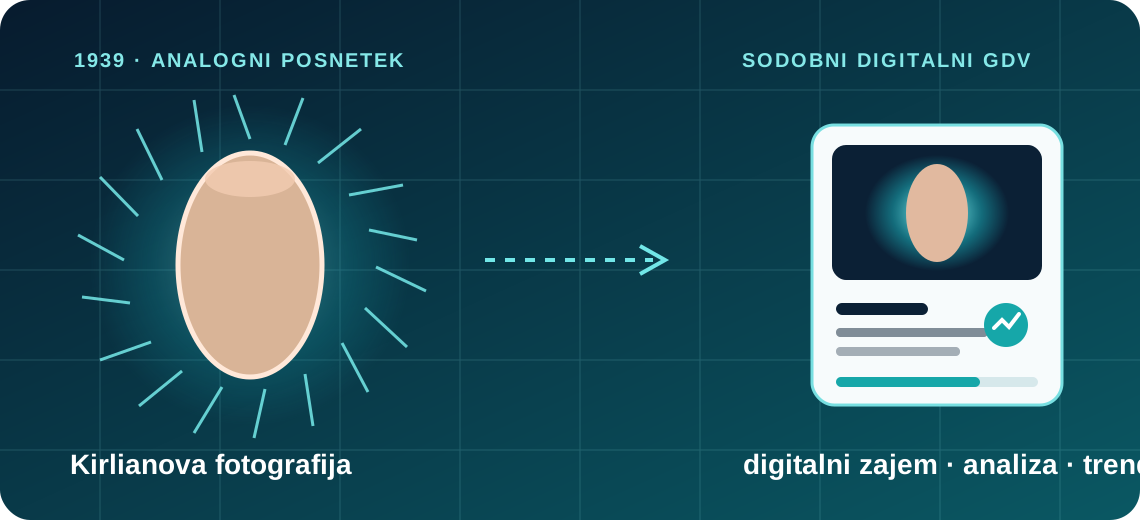
Bio-Well, GDV and EPI: what is the difference?
Separate the device brand, measurement method and interpretation layer.
Read article →From corona discharge to a measurable pattern
An in-depth technical review of GDV/EPI physics, corona morphology, acquisition quality, repeatability, AI, HRV and the limits of interpretation.
Read technical article →How to choose a GDV Studio license
Trial, Scan Pack, Lifetime, Professional or Clinic: a practical guide to usage allowances and license binding, without a price list.
Read article →
HRV, ECG and GDV: what combined measurements may reveal about the body’s response
HRV, ECG and GDV combine physiological and optical data. A careful guide to measuring and comparing them without diagnostic shortcuts.
Read article →HRV and stress: what do changes really mean?
HRV is sensitive to autonomic regulation but is not a standalone stress detector. Learn how to interpret RMSSD, SDNN and personal trends.
Read article →How to perform a combined HRV + GDV measurement
A practical protocol for comparable Polar H10 ECG/HRV and GDV measurements before and after breathing, meditation or another intervention.
Read article →Polar H10 for HRV and ECG: why we use it in GDV Studio
Why Polar H10 is a useful RR/ECG source for GDV Studio, and where a chest strap differs from diagnostic clinical ECG.
Read article →Kirlian photography: from a historical phenomenon to modern GDV
How corona discharge is formed, what influences the image and what digital GDV added to the classic analogue technique.
Read article →What is GDV and what does it actually measure?
A clear distinction between optical capture, calculated image features and the careful interpretation of results.
Read article →
Repeatability and Calibration in GDV Measurements
Without controlled acquisition, calibration and quality assessment, procedural variation can exceed the change in the measured signal.
Read article →
How to Track GDV Results Over Time
A single measurement is a snapshot. Long-term review requires comparable conditions, trends, ranges and cautious interpretation of deviations.
Read article →Human Potential
15
IQ vs. EQ: What Is the Difference and Why Do Both Matter?
A clear comparison of cognitive ability and emotional intelligence without forcing them into one score.
Read article →Emotional Intelligence: What EQ Measures and What It Does Not
EQ or EI, emotional regulation, social situations, limitations and the difference between General and Workplace EQ.
Read article →Free IQ test: what the result means
How to interpret a score without overclaiming and use it as a guide for further development.
Read article →Developing cognitive potential throughout life
The role of practice, sleep, motivation, environment and high-quality feedback.
Read article →
Human beings: the most complex system on Earth, born without a user manual
We learn to operate machines, yet rarely learn systematically how to manage attention, energy, emotions, habits and decisions.
Read article →
Nasal breathing: a useful habit without exaggerated promises
The nose filters, humidifies and warms air; nasal and paranasal structures are also an important nitric-oxide source. What can be tested safely?
Read article →
Walking without your phone: a simple attention reset
A short walk without a screen or audio creates room for observation, reflection and reduced cognitive noise.
Read article →
Cold water on the face: a less extreme route to brief calming
Instead of an aggressive cold shower, a mild, brief and controlled facial stimulus can be tested.
Read article →
Morning light and evening darkness: the body’s strongest timing signal
Light is one of the strongest signals to the circadian system. Timing matters more than fashionable gadgets.
Read article →
Active recall and spaced repetition: learning that lasts
Rereading creates familiarity. Retrieval without help and spaced repetition better reveal what we truly know.
Read article →
Microbreaks during sedentary work: a small habit with broad reach
Brief regular movement does not replace exercise, but it can break prolonged sitting and support attention.
Read article →
Boredom as a laboratory for creativity
Removing stimulation does not automatically produce genius. It creates space for the brain to connect unfinished thoughts.
Read article →
Decision journaling: learning from your own thinking
Memory often reshapes the past around the outcome. A brief note before a decision preserves the original reasoning.
Read article →
One task at a time: protection from switching costs
Multitasking is often rapid switching rather than parallel high-quality work. Every switch consumes attention.
Read article →
Hydration and cognitive performance: use data, not myths
Water is essential, but universal litre targets do not fit everyone. Context and bodily signals are more useful.
Read article →NODVIA & Automation
6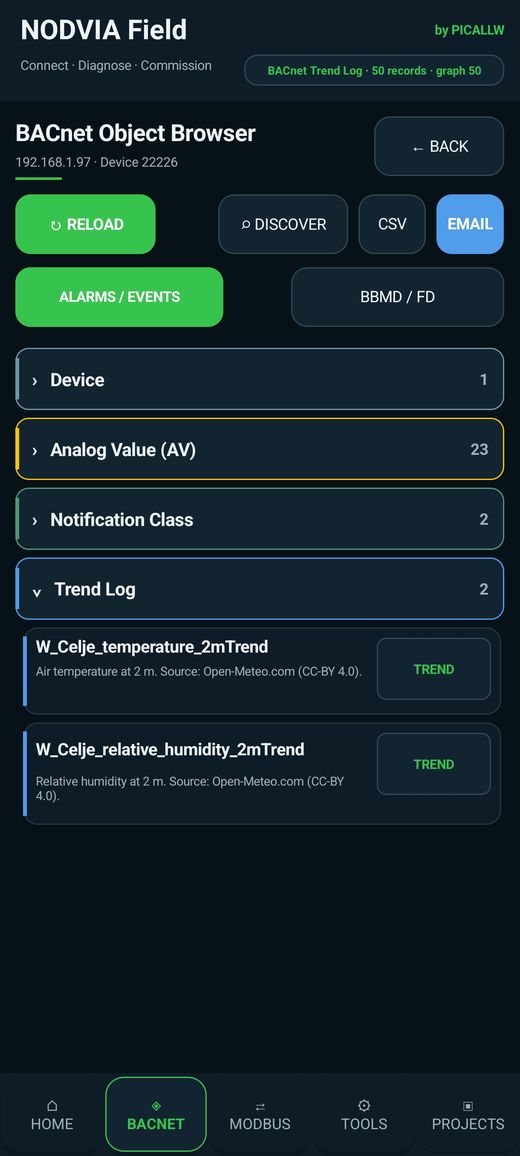
Android BACnet, Modbus, KNX and M-Bus field app
What a real multi-protocol building-automation field workflow should support.
Read article →BACnet Troubleshooting Guide: Complete Field Guide
43 practical problems: BACnet/IP, BBMD, FDR, MS/TP, Device IDs, routing, APDU, COV, Wireshark and BACnet/SC.
Read the field guide →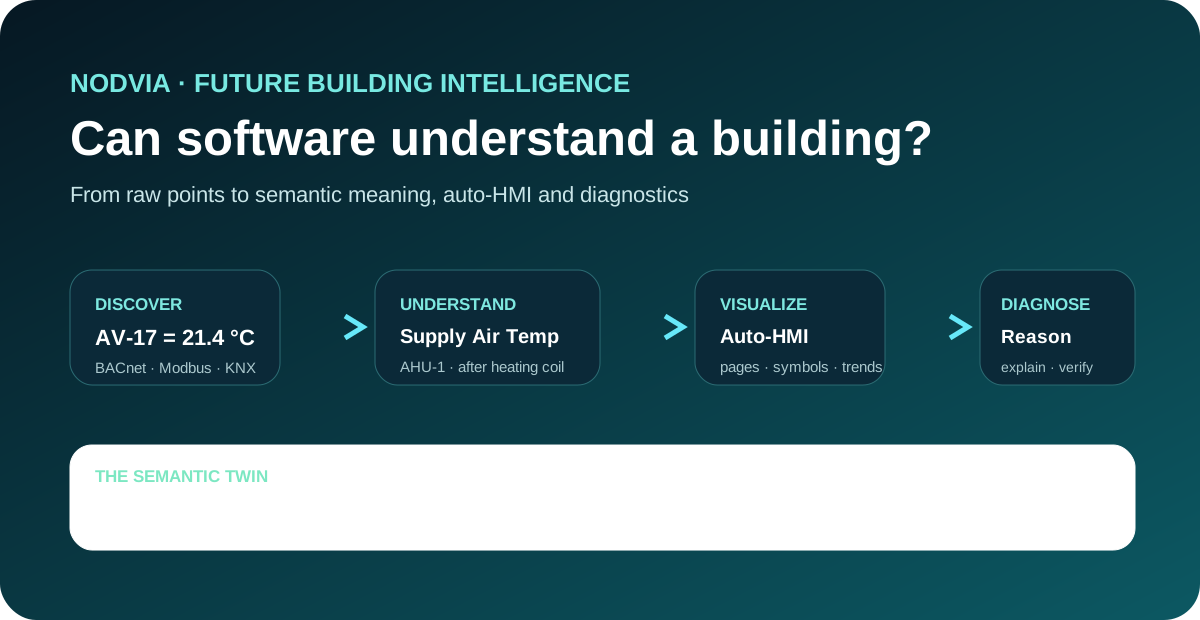
Can Software Understand a Building?
From BACnet points and semantic models to auto-generated HMI, intelligent diagnostics and a possible future direction for NODVIA.
Read article →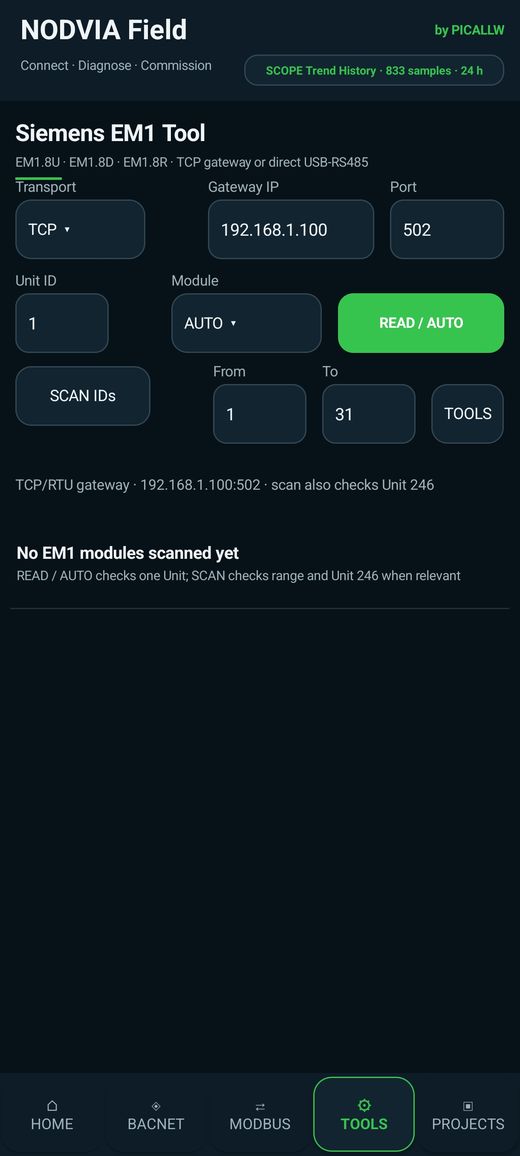
Siemens EM1 Modbus I/O modules: practical, cost-effective expansion and faster commissioning
An in-depth look at EM1.8D, EM1.8R and EM1.8U, Modbus addressing, commissioning and the dedicated NODVIA Field EM1 Tool.
Read article →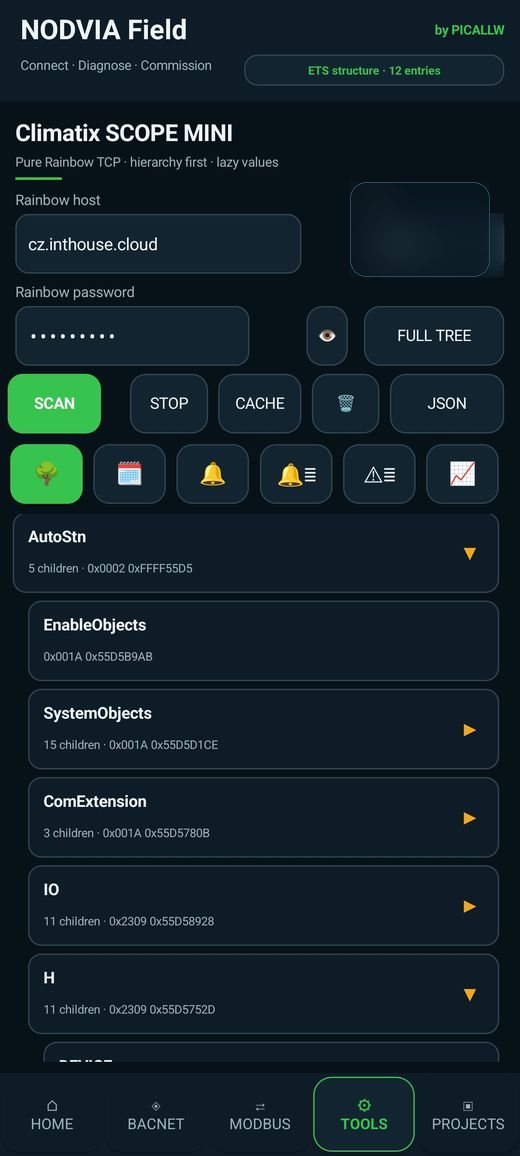
Siemens Climatix in the field: from HVAC OEM controller to SCOPE MINI on Android
What Climatix is, what the official Siemens SCOPE actually provides, and how SCOPE MINI fits into a professional mobile service workflow.
Read article →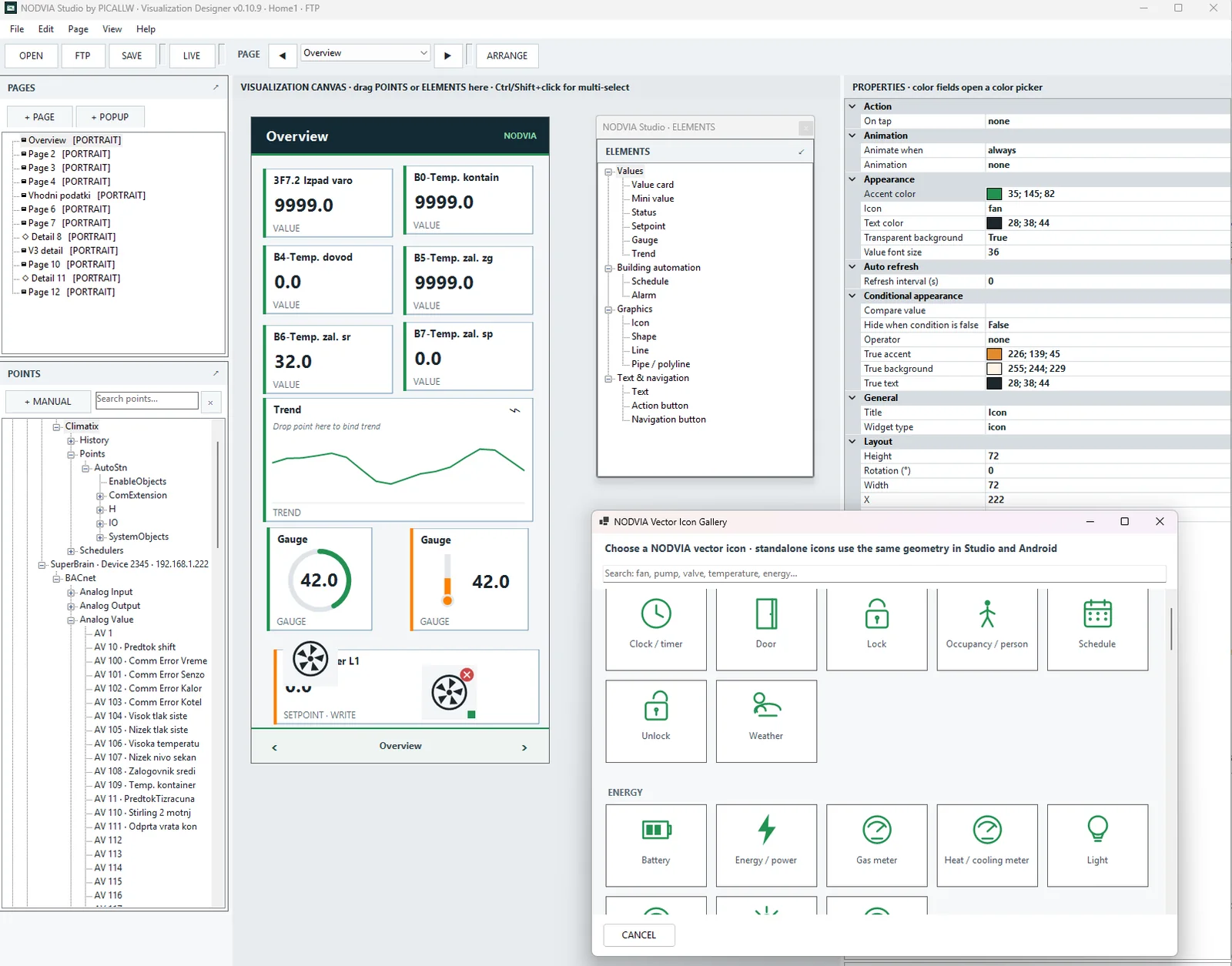
Field → Studio → Cloud → View: from field point to operational HMI
How Field project points move into Studio, Cloud deployment and the standalone Android NODVIA View runtime.
Read article →